
PoE Switches
Power and connect your devices. Explore PoE switches for access points, cameras, and network installations.
262 products

- Free shippingOn orders over $1,000
- Business pricingVolume & trade discounts
- Expert supportSpec help from pros
-
Cisco Catalyst C1200-24FP-4X Switch - 24-Port Gigabit PoE+ (375W), 4x 10G SFP+, Layer 3 Managed
Regular price $890.99 USDRegular priceUnit price per -
Cisco Catalyst C1200-24FP-4G Ethernet Switch - 24-Port Gigabit Full PoE+ (375W), 4x 1G SFP, Layer 3 Managed (C1200-24FP-4G)
Regular price $882.99 USDRegular priceUnit price per -
Cisco Catalyst C1200-16P-2G Ethernet Switch - C1200-16P-2G
Regular price $598.99 USDRegular priceUnit price per -
Yealink RCH40 Room Cable Hub - 5-Port Gigabit PoE+ Switch, 90W Budget, 802.3af/at, Conference Room A/V Networking (1303166)
Regular price $189.00 USDRegular priceUnit price per -
SonicWall SWS14-24FPOE - 24-Port Gigabit PoE Managed Switch, 410W Budget, 4x 10G SFP+ Uplinks (02-SSC-2468)
Regular price $1,026.99 USDRegular priceUnit price per -
SonicWall SWS14-48FPOE 48-Port PoE Switch - 740W, 4x SFP+ (02-SSC-2466)
Regular price $1,656.99 USDRegular priceUnit price per -
SonicWall Switch SWS12-8POE - 02-SSC-2463
Regular price $346.99 USDRegular priceUnit price per -
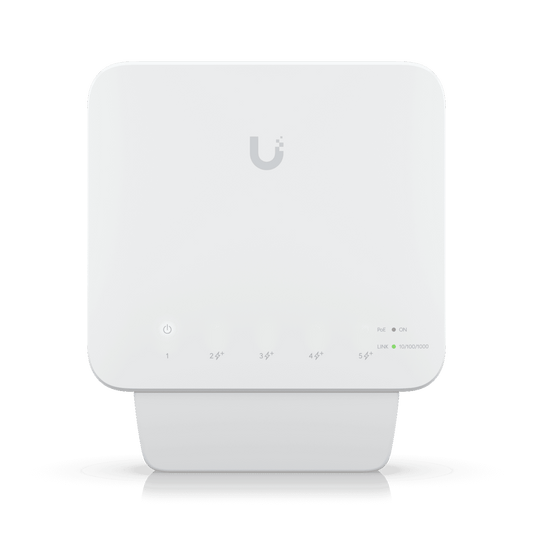
Ubiquiti UniFi Switch Flex - 5-Port Gigabit PoE, IP55 Indoor/Outdoor, 46W Budget, Fanless (USW-Flex)
Regular price $122.99 USDRegular priceUnit price per$154.99 USDSale price $122.99 USDIn stockSale -
SonicWall SWS14-48FPOE PoE Switch - 48-Port GbE, 4x 10G SFP+, 740W PoE Budget, 1U Rack-Mount (02-SSC-8383)
Regular price $1,912.99 USDRegular priceUnit price per -
SonicWall SWS14-48FPOE Managed PoE Switch - 48-Port GbE, 740W PoE Budget, 1U Rack-Mount (02-SSC-8382)
Regular price $2,199.99 USDRegular priceUnit price per -
SonicWall Switch SWS12-10FPOE - 02-SSC-2464
Regular price $379.99 USDRegular priceUnit price per -
Ubiquiti UniFi Pro XG 48 PoE - 48-Port 10G/2.5G Layer 3 PoE+++ Switch with 25G SFP28 Uplinks and 1,080W Budget (USW-Pro-XG-48-PoE)
Regular price $2,993.99 USDRegular priceUnit price per


PoE Switches Buying Guide
A PoE (power over Ethernet) switch sends power and data down the same Ethernet cable, so security cameras, Wi-Fi access points, and VoIP phones run without an outlet or power adapter at each device. That saves electrical work on every install, makes ceiling and exterior mounting simple, and centralizes power for every device at one PoE network switch, which is easy to back up with a UPS.
PoE, PoE+, and PoE++ Switches
Match the switch to what you're powering. Standard PoE handles VoIP phones and basic devices, PoE+ covers typical fixed security cameras and Wi-Fi access points, and PoE++ steps up for high-power gear like PTZ cameras and Wi-Fi 7 access points. Then add up the wattage of everything you plan to connect and choose a switch whose total PoE budget covers it with room to grow. For a single device, a PoE injector is the simpler option.
Managed vs. Unmanaged PoE Switches
An unmanaged PoE switch is plug and play, a good fit for a small camera system or office. A managed PoE switch adds VLANs to keep camera and guest traffic separate, traffic priority for voice, and per-port power control, so you can reboot a frozen camera or access point without climbing a ladder. Cloud-managed lines like UniFi, TP-Link Omada, Zyxel Nebula, and HPE Instant On let you set up and monitor every switch from one app or cloud dashboard.
Specialty PoE Switches
Not every job fits a standard switch. Multi-gig PoE switches keep up with Wi-Fi 6E and Wi-Fi 7 access points, industrial DIN-rail models from TRENDnet have hardened metal housings rated for extreme temperatures, and the Netgear AV Line is designed for AV-over-IP systems. For enterprise campus networks, browse our UniFi Enterprise campus switches or the full range of network switches.