- Description
- Specifications
6-Zone Conventional Fire Alarm Control Panel with Dual-Line DACT, Class A/B Waterflow Input, and Built-In 1.0A Power Supply for Small to Mid-Size Fire Protection Systems
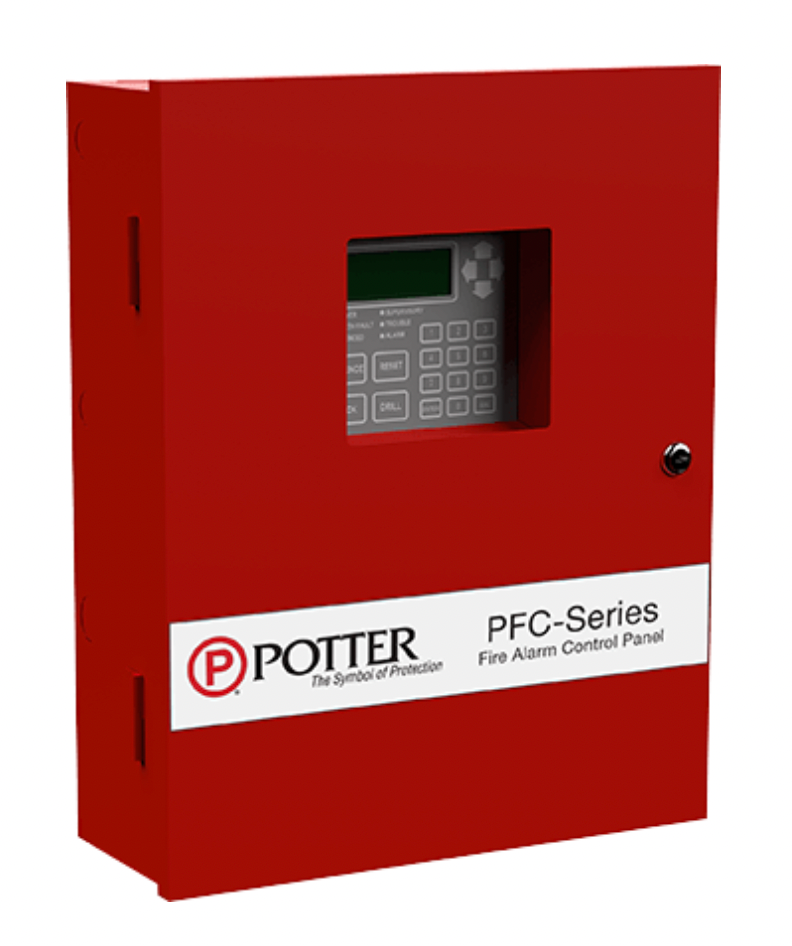
The Potter PFC-6006 is a 6-zone conventional fire alarm control panel designed for small to mid-size fire protection systems including sprinkler monitoring, zone detection, and central station reporting. Six programmable input zones include one selectable Class A/B waterflow input and support for two-wire smoke detectors, while the onboard dual-line DACT connects to monitoring stations for remote alarm reporting and system programming. The built-in 1.0-amp power supply delivers 0.5A to the notification appliance circuit and 0.5A of auxiliary power that can be set to constant or resettable output.
The PFC-6006 is part of the Potter conventional fire panel lineup and operates on 120VAC 60Hz in a lockable 18-gauge sheet steel cabinet with a Lexan viewing window. The 32-character LCD display provides clear system status readout, an event history buffer logs alarm and trouble events, and the removable circuit assembly simplifies installation and service. P-Link bus communication supports up to four RA-6075 remote annunciators for multi-location monitoring in larger buildings.
Where the PFC-6006 Fits
- Small commercial buildings and retail spaces where six programmable zones cover the sprinkler system and basic detection needs, the Class A/B waterflow input monitors the fire sprinkler riser, and the dual-line DACT reports alarms to a central monitoring station without adding a separate communicator
- Industrial facilities and warehouses with sprinkler monitoring where the conventional zone architecture provides straightforward coverage without the complexity and cost of an addressable system, the 0.5A NAC output powers horn strobes across the notification circuit, and the lockable steel cabinet withstands mechanical room environments
- Small institutional and educational buildings where up to four RA-6075 remote annunciators on the P-Link bus extend system status to multiple locations throughout the building, the 32-character LCD gives operators detailed alarm and trouble information, and UL-864 listing meets authority having jurisdiction requirements
What the PFC-6006 Delivers
- 6 Programmable Zones with Class A/B Waterflow: Six input zones including one selectable Class A/B waterflow input and support for two-wire smoke detectors. Programmable zone types accommodate sprinkler monitoring, manual pull stations, and detector circuits in a single panel.
- Dual-Line DACT for Central Station Reporting: Onboard dual-line digital alarm communicator transmitter connects to monitoring stations for alarm, supervisory, and trouble reporting. Supports remote programming for off-site system configuration.
- Built-In 1.0A Power Supply: 1.0 amp at 120VAC 60Hz with 0.5A NAC output and 0.5A auxiliary power. Auxiliary output selectable between constant and resettable. Battery standby current of 105mA and alarm current of 160mA.
- Lockable Steel Cabinet with LCD Display: 18-gauge sheet steel enclosure with hinged, removable locked door and Lexan viewing window. 32-character LCD display with system status LEDs and event history buffer. 18-1/2 x 14-1/4 x 4-3/4 inches.
- Remote Annunciator Support: P-Link bus supports up to four RA-6075 remote annunciators for multi-location system monitoring. Removable circuit assembly for simplified installation and service. UL-864, NFPA-70, and NFPA-72 listed.
What Is a Conventional Fire Alarm Panel
A conventional fire alarm panel is a fire alarm control panel that monitors detection devices organized by zone rather than by individual device address. When a detector or pull station activates, the panel identifies the zone where the alarm originated but not the specific device, which keeps system cost and complexity lower than addressable panels for buildings with straightforward layouts. The PFC-6006 provides six programmable zones with Class A/B waterflow monitoring and two-wire smoke detection support, making it a practical choice for small to mid-size commercial and institutional buildings where zone-level identification meets the fire protection requirements.